.png)
Electronics Manufacturing ERP: Better Visibility and Control
See how electronics manufacturers can connect inventory, purchasing, production, quality, and finance in one ERP system.
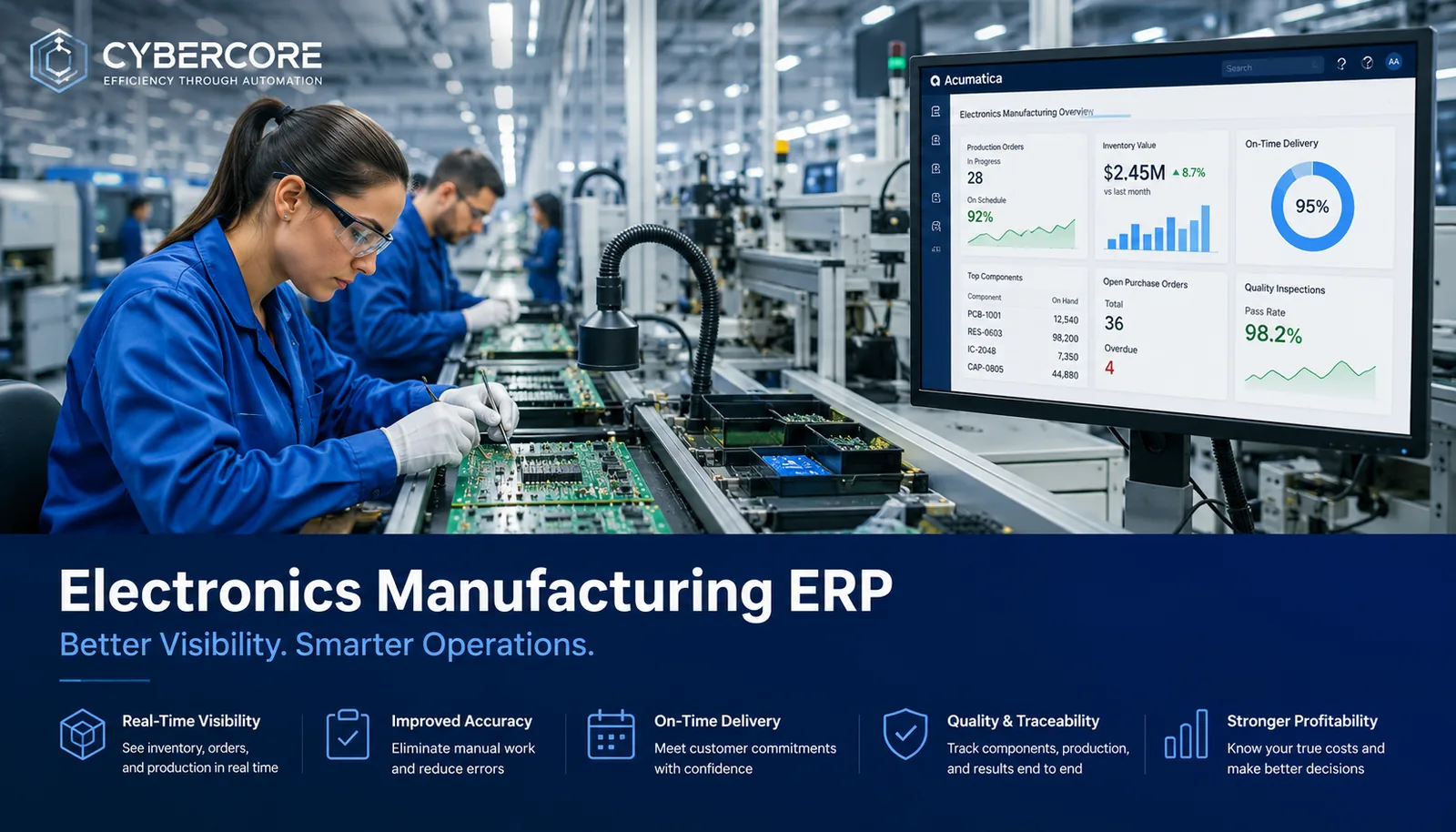
Why Electronics Manufacturers Need a Connected ERP
Electronics manufacturers often rely on separate systems for purchasing, inventory, production planning, quality control, and finance. That makes it harder to see what is happening across the business and can lead to delays, duplicate data, and avoidable mistakes.
A connected ERP system brings these functions together in one place, giving teams better visibility, stronger control, and faster access to the information they need.
Common Challenges in Electronics Manufacturing
Electronics manufacturing depends on accurate information across purchasing, inventory, production, quality, and finance. When those areas are handled in separate systems, teams can lose visibility and spend more time reconciling data than managing the operation.
- Inventory visibility: Know what components are available, committed, or running low.
- Purchasing coordination: Keep supplier activity aligned with production demand.
- Production delays: Identify shortages and bottlenecks before they affect delivery.
- Quality and traceability: Track components, inspections, and results through the process.
- Cost accuracy: See the true cost of materials, labor, and production.
- Data consistency: Reduce duplicate entry and conflicting information across departments.
What an Electronics Manufacturing ERP Can Connect
A connected ERP platform can bring the core parts of the operation together, giving teams one source of information across the business.
- Inventory management: Track components, finished goods, allocations, and availability.
- Purchasing and suppliers: Align procurement with demand and production requirements.
- Bills of material and item data: Keep product structures, revisions, and component information organized.
- Production planning: Coordinate schedules, materials, and work in process.
- Quality and traceability: Track inspections, components, and results through the production cycle.
- Finance and costing: Connect operational activity with actual costs, margins, and financial reporting.
Why a Connected ERP Matters
In electronics manufacturing, small issues can quickly affect schedules, customer commitments, and profitability. A connected ERP system helps teams see problems earlier, coordinate work across departments, and make decisions using the same information.
Instead of managing separate tools and spreadsheets, manufacturers can work from a single operational platform with clearer reporting, better traceability, and stronger control over day-to-day processes.
How CyberCore Helps Electronics Manufacturers
CyberCore helps electronics manufacturers connect ERP, inventory, purchasing, production, quality, finance, and automation so teams can work from the same operational data.
As an Acumatica Gold Partner with more than a decade on the platform, CyberCore focuses on practical business processes — reducing manual work, improving visibility, and helping manufacturers get more value from their ERP system.
Electronics Manufacturing ERP: A Stronger Foundation for Growth
Electronics manufacturing depends on speed, accuracy, and coordination. A connected ERP system helps bring purchasing, inventory, production, quality, and finance together so teams can work with better information and fewer manual handoffs.
For manufacturers looking to improve visibility, reduce operational friction, and support growth, ERP becomes the foundation that connects the business and makes future automation easier to build.
.webp)